Glyco Reset Guides: Vinegar Research and How to Choose Drops
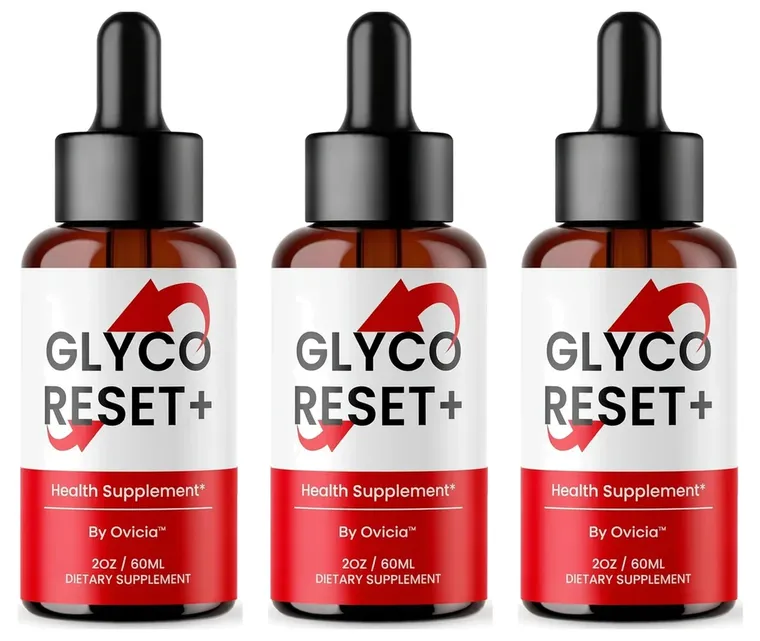
Written by the Glyco Reset editorial team
Last updated · Who reviewed this page · How we write and review
The Glyco Reset guides cover two topics: what apple cider vinegar trials show for blood sugar, and a 12-point checklist for choosing blood sugar drops. Three blog posts explain the vinegar doses studies used, the four formulas sold under the Glyco Reset name and how to check a doctor endorsement. A glossary defines twelve label and research terms.
Glyco Reset guides: two in-depth reads
The Glyco Reset guides explain what apple cider vinegar research shows and how to choose blood sugar drops. Both are free and written in everyday words.
Read the vinegar guide first, then use the checklist if you are comparing bottles. Each card opens the full guide.
Apple Cider Vinegar and Blood Sugar: What the Studies Show
Fasting sugar and A1C results, the 13.75 to 30 mL doses trials used, timing, pills vs liquid, and four risks.
How to Choose Blood Sugar Drops: A Buyer's Checklist
Twelve checks for any bottle, from the Supplement Facts panel to lab reports, with Glyco Reset scored honestly.
Glyco Reset blog: study doses, formulas and fake endorsements
The Glyco Reset blog takes one question at a time. Three posts cover what readers ask about most.
Every post links its sources, so you can open the studies yourself. All posts are listed on the blog page.
How Much Vinegar Did the Studies Use?
Trial by trial: the tablespoons, the weeks and the people behind the vinegar results.
Which Glyco Reset Are You Looking At?
Four formulas share the name in 2026. How to tell which one is in your bottle.
Fake Doctor Endorsements: How to Check
Famous names on supplement ads, the FTC rules and a quick way to verify a doctor.
Which Glyco Reset read answers your question?
Match your question to a read below. Most people need the vinegar guide first and the checklist second.
| Your question | Where to read |
|---|---|
| Does vinegar really lower blood sugar? | Apple cider vinegar guide |
| Is vinegar safe every day? | Apple cider vinegar guide, risks table |
| What should a good drops label show? | Buyer's checklist |
| Why do ads show different ingredients? | Which Glyco Reset post |
| Is 60 ml of drops a lot of vinegar? | Study doses post |
| Did a famous doctor back these drops? | Fake doctor endorsements post |
Glyco Reset glossary: label and research terms in plain English
The Glyco Reset glossary explains twelve terms you will meet in the guides. The right column shows where each one applies to these drops.
Blood sugar ranges come from the NIH page on prediabetes (NIDDK, 2025). Label rules come from the FDA (FDA, 2026).
| Term | What it means | For Glyco Reset |
|---|---|---|
| Supplement Facts panel | The box that lists serving size and the amount of each ingredient | Not supplied for these drops |
| Serving size | The amount the label counts as one serving | Not stated in any material we have |
| Dropper | The glass pipette in the cap; its volume varies by bottle | Used to take the serving the label directs |
| Acetic acid | The main active compound in vinegar | Amount not stated |
| Added sugar | Sugar put into a product, not found in it naturally | Pure cane sugar; amount not stated |
| Gel-forming fiber | Soluble fiber, such as pectin, that thickens in water | Apple pectin; amount not stated |
| Structure/function claim | A claim about supporting a normal body function | “Supports Healthy Glucose Utilization*” |
| Fasting blood sugar | Blood sugar after a night without food; 100 to 125 mg/dL counts as prediabetes | The main result in vinegar trials |
| A1C | Your average blood sugar over the past few months; 5.7% to 6.4% counts as prediabetes | A smaller, less certain result in vinegar trials |
| Meta-analysis | A study that pools several trials | Used for the vinegar dose ranges |
| Open-label trial | A trial where people know what they take | One 8-week vinegar trial |
| Lot number and CoA | A batch code, and a lab report for that batch | GLY-26/GL-5619 and GLY-5619-26-GL, draft labels only |
How the Glyco Reset guides read a supplement label
The Glyco Reset guides read every label in the same four steps. You can use them on any bottle, in a store or online.
- 1
Find the serving
Note the serving size and how many servings the bottle holds.
- 2
Write down each amount
List every amount, and mark any ingredient with no amount at all.
- 3
Compare with research
Look up the daily dose used in human studies for each key ingredient.
- 4
Scan the claims
“Supports” is normal label wording. “Lowers blood sugar” is a red flag.
What the Glyco Reset guides found about the drops
The guides found a sweetened vinegar liquid with no published amounts. That makes the research impossible to borrow for a prediction about this bottle.
It does not make the drops unsafe. It means the honest answer to most dose questions is “not stated.”
- Vinegar trials used 13.75 to 30 mL a day for 4 to 12 weeks (Arjmandfard et al., 2025)
- Fiber trials used a median 13.1 g a day (Jovanovski et al., 2019)
- The vinegar and pectin amounts in the drops are not stated
- Pure cane sugar, an added sugar, is on the list
- No study of the finished drops exists
Why the Glyco Reset guides focus on vinegar and fiber
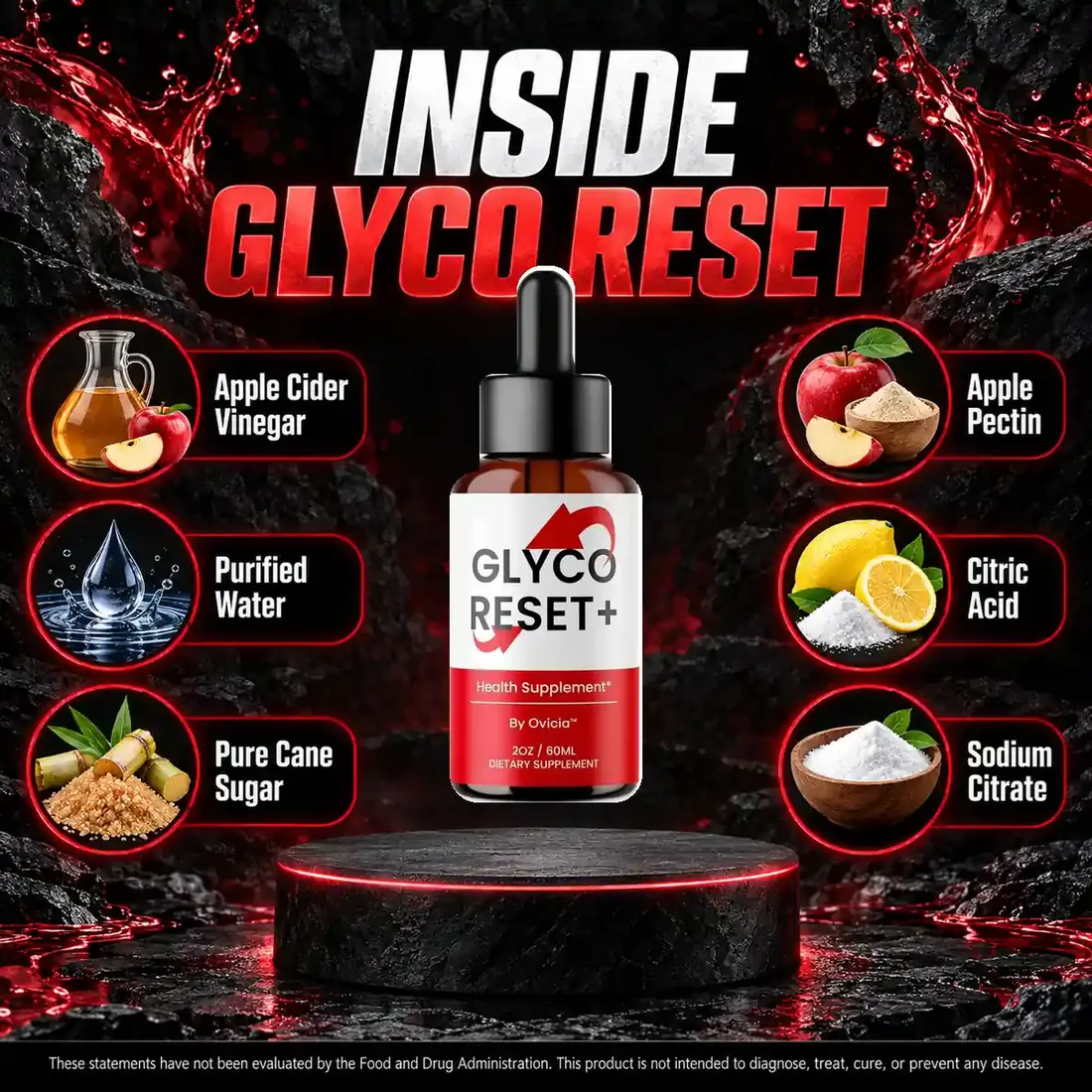
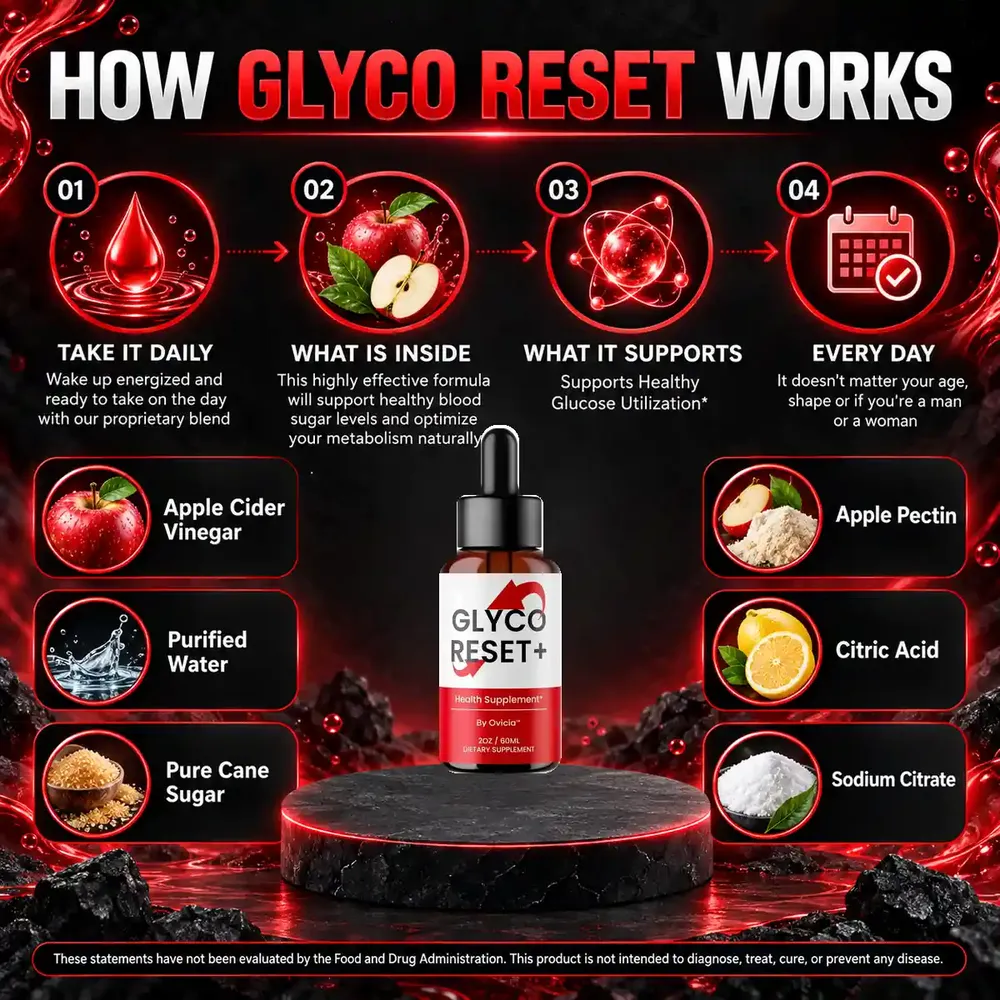
Of the six ingredients in Glyco Reset, only apple cider vinegar has direct blood sugar research. Apple pectin, a gel-forming fiber, comes second, with fiber trials measured in grams.
The other four have no blood sugar role, so the guides spend little time on them.
Apple cider vinegar
Small fasting sugar effects in trials at 1 to 2 tablespoons a day.
Apple pectin
Soluble fiber; trials of gel-forming fiber used grams a day.
Pure cane sugar
An added sugar, listed in a product sold for blood sugar.
Purified water
The liquid base that carries the rest.
Citric acid
An acidity regulator and flavor.
Sodium citrate
A buffer that keeps the acidity steady.
How the Glyco Reset guides use research
The Glyco Reset guides lean on NIH and FDA pages, medical society standards and peer-reviewed reviews. Each research line names the dose and links the source.
The American Diabetes Association does not recommend supplements such as chromium or cinnamon for blood sugar benefit (ADA, 2026). The guides say so plainly, even though Glyco Reset is sold for blood sugar support.
The medical reviewer slot stays blank until a named, qualified person has checked each guide. The full rules are in the editorial policy.
How to use the Glyco Reset guides at your next checkup
The Glyco Reset guides work best as a list of questions for your doctor or pharmacist. Bring the bottle and tick each point as you cover it.
Questions for your next appointment: 0 of 6 checked
What the Glyco Reset guides will not tell you
The Glyco Reset guides stick to what the sources support. A few claims never appear, however often people search for them.
- That any drops lower blood sugar or A1C
- That a supplement can replace insulin, metformin or other medicine
- A number of pounds you will lose
- How many days a bottle lasts, since the serving size is not published
Short answers to common product questions sit on the Glyco Reset FAQ, and the ingredients page covers each label line.
Questions about the Glyco Reset guides
Questions people type into Google and Bing, answered from the label and the sources on this page.
Are the Glyco Reset guides free to read?
Yes. Every guide and blog post is free. There is no sign-up box, no email wall and no paywall.
Which Glyco Reset guide should I read first?
Start with the apple cider vinegar guide. Vinegar is the one ingredient in the drops with blood sugar research, so it sets the scene for everything else.
Do the Glyco Reset guides say the drops work?
No. The guides cover research on vinegar and fiber on their own, not on the finished drops. They also show that the amounts in the drops are not published.
Can the Glyco Reset guides replace advice from my doctor?
No. They explain public research in plain words. Your own test results, medicines and health history belong with your doctor.
Why do the guides compare tablespoons with drops?
Because the vinegar trials measured doses in tablespoons and milliliters. A whole 60 ml bottle of Glyco Reset would cover only 2 to 4 days of a study dose even if it were pure vinegar.
What is a meta-analysis?
It is a study that pools the results of several trials to get a clearer answer. The vinegar guide leans on several, such as one that pooled 7 trials in type 2 diabetes (Arjmandfard et al., 2025).
What does open-label mean in a study?
It means the people in the trial knew what they were taking. That can make results look better than they are, so open-label findings count for less.
How often are the Glyco Reset guides checked?
Each guide shows a Last updated date near the top. The most recent full check finished on October 13, 2026.
Can I suggest a topic for a new guide?
Yes. Send the idea to [email protected]. Topics that many readers ask about get written first.