How to Choose Blood Sugar Drops: A 12-Point Buyer's Checklist
Written by the Glyco Reset editorial team
Last updated · Who reviewed this page · How we write and review
Start with the ADA view: supplements such as chromium and cinnamon are not recommended for blood sugar benefit. If you still want drops, check for a full Supplement Facts panel, amounts close to study doses, “supports” wording, any added sugar and a lab report for your lot. Glyco Reset passes on seller contact and refund terms but fails on amounts.
Do blood sugar drops work? What the evidence says
No blood sugar drop has been proven to control blood sugar. The American Diabetes Association does not recommend supplements such as chromium, magnesium, cinnamon or aloe vera for blood sugar benefit (ADA, 2026).
The FDA does not approve supplements for safety or effectiveness before sale (FDA, 2022). So the job of checking a bottle falls to you, your doctor and your pharmacist.
The Glyco Reset buyer's checklist for any blood sugar drops
Run any bottle through these twelve checks before you buy. A product that fails several asks for trust instead of giving proof.
The counter shows how many checks the product passes.
Before you buy drops, check: 0 of 12 checked
How to read the Supplement Facts panel on blood sugar drops
Start with the Supplement Facts panel, because the law requires it. It must list the serving size and the amount of each dietary ingredient per serving (FDA, 2026).
Claims such as “supports healthy blood sugar” must carry an FDA disclaimer (FDA, 2024). The Glyco Reset label page shows what one real bottle prints.
| What to find | Why it matters | In the Glyco Reset material we have |
|---|---|---|
| Serving size | Tells you how much one serving is | Not stated |
| Servings per bottle | Tells you how long a bottle lasts | Not stated |
| Amount of each ingredient | Lets you compare with studies | Not stated for any of the six |
| Added sugar | Matters if you watch sugar | Pure cane sugar listed; amount not stated |
| FDA disclaimer | Required next to support claims | Asterisk on the claims |
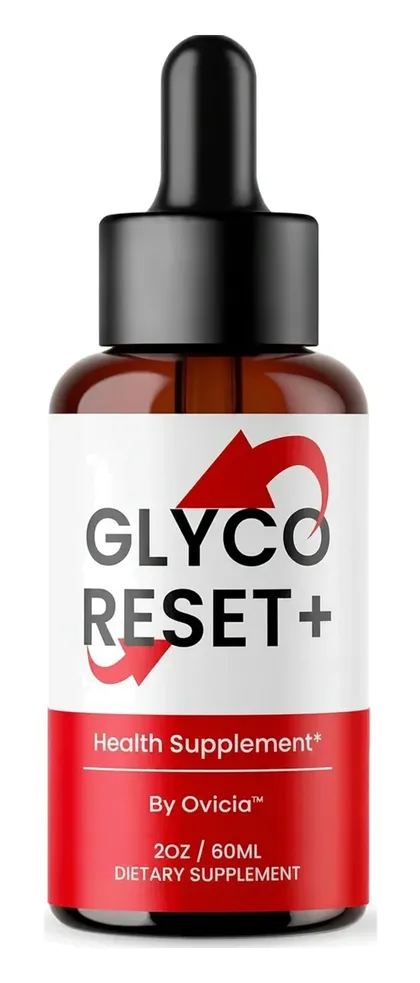
| Maker or brand | Lets you reach the company | “By Ovicia”; no address found |
How do you compare a label dose with study doses?
Set the daily amount on the label beside the daily amount used in human trials. You need only the label and one study summary.
The same five steps work for drops, capsules and gummies.
- 1
Find the serving
Read the serving size on the Supplement Facts panel. For drops, check whether it is given in ml or in droppers.
- 2
Note each amount
Write down the amount of each key ingredient in one serving.
- 3
Count daily servings
Multiply by the number of servings the label directs each day.
- 4
Look up the study dose
Find the daily amount used in human trials, such as 13.75 to 30 mL of vinegar.
- 5
Compare the two
Divide the label amount by the low end of the study range to see what share you would get.
With Glyco Reset, the math stops at step two, because no amount is published. Even so, the whole 60 ml bottle would cover only 2 to 4 days of a vinegar study dose if it were pure vinegar (Arjmandfard et al., 2025). The apple cider vinegar guide lists those study doses.
Which blood sugar supplement ingredients have evidence?
Only a few ingredients show any effect, and they work at large daily amounts. Apple cider vinegar and gel-forming fiber are the clearest examples.
Most others lack good evidence, NCCIH says (NCCIH, 2018).
| Ingredient | What research shows | Daily amount studied |
|---|---|---|
| Apple cider vinegar | Fasting sugar about 22 mg/dL lower in type 2 diabetes (Arjmandfard et al., 2025) | 13.75 to 30 mL |
| Gel-forming fiber, such as pectin | Modest A1C and fasting sugar gains (Jovanovski et al., 2019) | Median 13.1 g |
| Chromium, magnesium, cinnamon, aloe vera | Not recommended for blood sugar by the ADA (ADA, 2026) | Not applicable |
| Other herbs and blends | Not reviewed on this site; ask your pharmacist | Varies |
Sublingual drops vs capsules: does the form matter?
No study we found shows that drops held under the tongue beat capsules for blood sugar. The form matters only when it changes what you actually take in.
Vinegar shows why. Liquid vinegar cut an after-meal sugar rise by 31%, while whole vinegar tablets did not (Feise et al., 2020). The FTC says a study supports a product only when its dose and form match (FTC, 2022).
Nothing we have from Glyco Reset says under the tongue. That instruction comes from a different eight-herb formula sold under a similar name.
Why do some blood sugar drops list sugar?
Some drops add sugar, and the label rarely says why. Glyco Reset lists pure cane sugar, which counts as an added sugar, with no amount per serving.
For scale, the Daily Value for added sugars is 50 grams a day (FDA, 2026). Its apple pectin amount is not stated either and is likely there to thicken the liquid.
Red flags in blood sugar supplement ads
The biggest red flag is a promise to lower blood sugar or replace medicine. The FDA and FTC warned ten companies in 2021 for diabetes claims like these (FDA, 2021).
Fake and paid reviews have been banned since October 21, 2024 (FTC, 2024). Watch for these signs:
- “Lowers blood sugar,” “reverses diabetes” or “stop your metformin”
- “FDA approved” on a dietary supplement
- A famous doctor's name with no verified endorsement
- Countdown timers and star ratings with no reviews you can read
- One brand name used for several different formulas
| Product sold under the name | What it contains or claims |
|---|---|
| Apple cider vinegar drops (this site) | Vinegar, water, cane sugar, pectin, citric acid, sodium citrate; By Ovicia |
| Eight-herb liquid | Berberine, Ceylon cinnamon, gymnema, bitter melon, banaba, chromium, juniper berry, licorice; 180-day guarantee |
| Olive-oil “biblical drink” | An oleocanthal pitch fronted by an unverified famous doctor's name |
| “Gluco Reset” | Berberine, chromium and alpha-lipoic acid |
The fake doctor endorsements post shows how to check a doctor's name.
Are blood sugar drops safe with diabetes medication?
Not always, so ask your doctor first. Anything that lowers blood sugar can add to insulin, sulfonylureas or meglitinides and push you into a low (NIDDK, 2021).
Vinegar may also interact with insulin and diuretics (Mayo Clinic, 2025). Bring the bottle to your next visit.
What does third-party tested mean on blood sugar drops?
Third-party tested means an outside lab checked a batch and wrote a report. A seller's badge is not the same thing.
FDA does not issue registration certificates, so a registration badge is not proof of approval (FDA, 2024). A real report shows these three things:
The report names an outside lab, not the brand.
The lot on the report matches the lot on your bottle.
Identity, amounts and contaminants, with results.
For Glyco Reset, no independent report has been published. The lot GLY-26/GL-5619 and CoA GLY-5619-26-GL references are draft labels, not lab proof.
Glyco Reset scored against the buyer's checklist
Glyco Reset passes on seller contact and refund terms, and fails on amounts and proof. Score any other bottle the same way.
| Check | What we found for Glyco Reset | Result |
|---|---|---|
| Serving size and amounts | Not stated in any material we have | Fail |
| Doses near research | Cannot be checked | Fail |
| Claim wording | “Supports” claims with an asterisk | Pass |
| Energy and circulation claims | No ingredient research found behind them | Fail |
| Name matches contents | Four formulas share the name; check your bottle | Caution |
| Added sugar | Pure cane sugar; amount not stated | Caution |
| Seller contact | Order desk +1 (302) 200-3480 and a New York returns address | Pass |
| Refund terms | 60 days from purchase; buyer pays return shipping | Pass |
| Lab report or product study | Neither published | Fail |
The testing and quality page tracks any lab report that appears.
Choosing blood sugar drops: common questions
Questions people type into Google and Bing, answered from the label and the sources on this page.
Do blood sugar drops actually work?
No drop has been shown to control blood sugar. NCCIH says most supplements lack evidence of benefit for diabetes (NCCIH, 2018), and no study of the finished Glyco Reset drops exists.
What should I look for in a blood sugar supplement?
Look for a full Supplement Facts panel, an amount beside every key ingredient, doses close to those in human studies, “supports” wording and a seller you can reach by phone.
Are sublingual drops better than capsules?
No study we found shows that drops under the tongue work better than capsules for blood sugar. What matters more is whether the dose and form match what research tested.
What ingredients in blood sugar supplements have evidence?
Apple cider vinegar and gel-forming fiber show small effects at large daily amounts, measured in tablespoons and grams (Arjmandfard et al., 2025) (Jovanovski et al., 2019). The ADA does not recommend chromium, magnesium, cinnamon or aloe vera for blood sugar.
What are red flags in blood sugar supplement ads?
Promises to lower blood sugar or replace medicine, “FDA approved” badges, a famous doctor you cannot verify, countdown timers and star ratings with no visible reviews.
Are blood sugar supplements safe with diabetes medication?
Not always. Anything that lowers blood sugar can add to insulin, sulfonylureas or meglitinides and cause a low (NIDDK, 2021). Ask your doctor before you add one.
What does third-party tested mean?
It means an outside lab, not the seller, tested a batch and wrote a report. A real report names the lab, the lot number and what was measured.
Why do some blood sugar drops list sugar as an ingredient?
Sellers rarely say why. Glyco Reset lists pure cane sugar, an added sugar, without an amount. The Daily Value for added sugars is 50 grams a day (FDA, 2026).
How do I compare doses on a label with doses in studies?
Multiply the amount per serving by your daily servings, then set it beside the daily dose used in trials. If the label gives no amounts, no comparison is possible.
Does the ADA recommend supplements for blood sugar?
No. Its 2026 Standards of Care say supplements such as chromium, magnesium, cinnamon and aloe vera are not recommended for blood sugar benefit (ADA, 2026).