How Does Glyco Reset Work? The Acetic Acid Idea
Written by the Glyco Reset editorial team
Last updated · Who reviewed this page · How we write and review
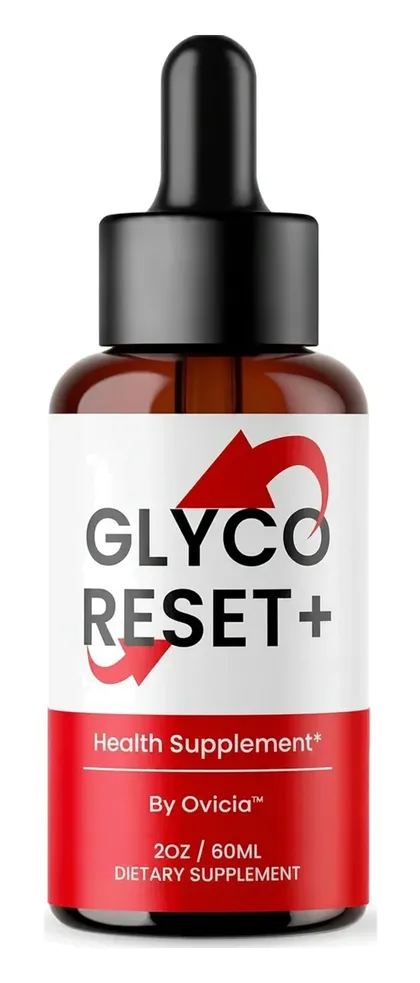
Glyco Reset is meant to work through acetic acid from apple cider vinegar, taken daily by dropper.
In trials, liquid vinegar with meals lowered the after-meal blood sugar rise, and 13.75 to 30 mL a day lowered fasting levels a little.
For the full list, see all six ingredients.
How is Glyco Reset supposed to work?
Glyco Reset is meant to be taken every day as a dropper serving of sweetened apple cider vinegar. The seller says it “Supports Healthy Glucose Utilization” and supports healthy blood sugar levels.
The working part, in theory, is acetic acid from the vinegar. The other five ingredients make the liquid, sweeten it and keep its acidity steady.
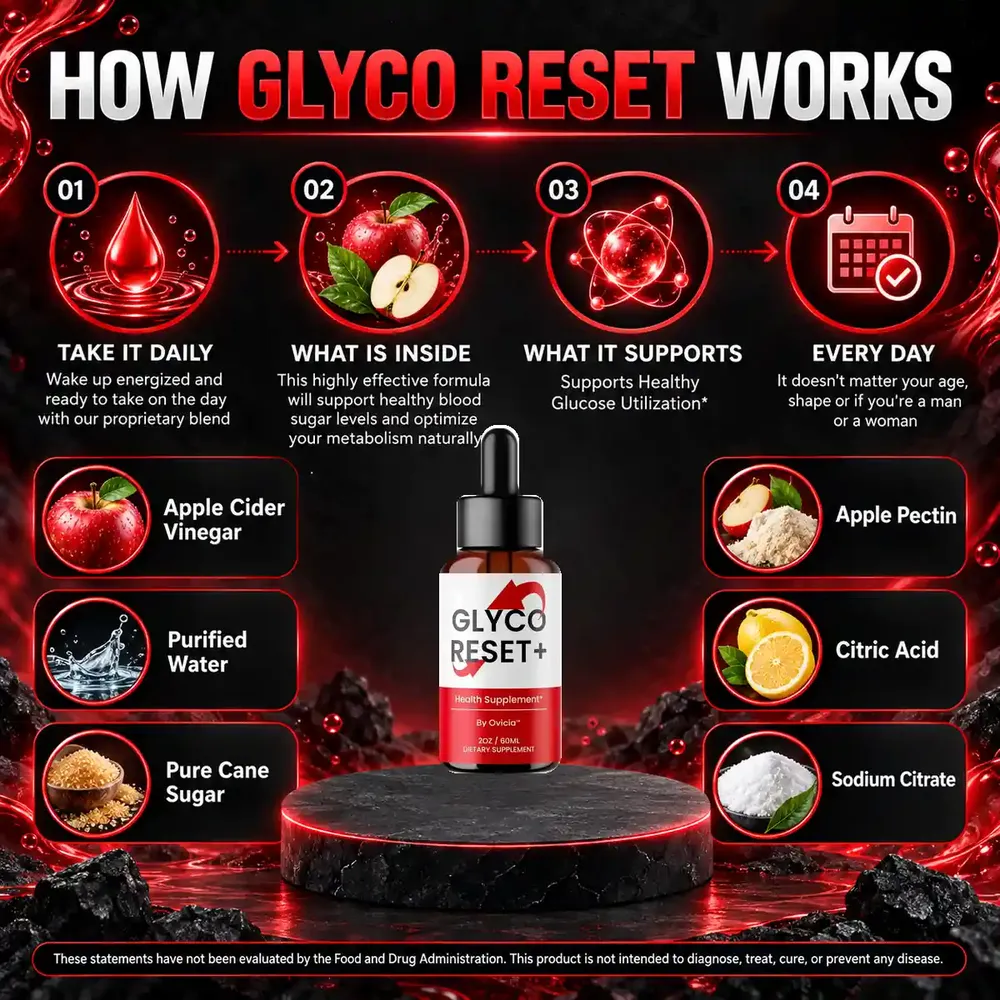
The Glyco Reset formula idea, step by step
The Glyco Reset idea follows five steps, from the dropper to the weeks of daily use that trials ran. The last step is the honest catch.
Each step lights up in turn. The research behind steps two to four is in the table further down.
- 1
Take the label serving
Use the dropper as the label directs. The serving size is not stated in the material we have.
- 2
Acetic acid arrives
Vinegar’s main compound is the part researchers study for blood sugar.
- 3
A smaller after-meal rise
In meal tests, liquid vinegar taken with food lowered the blood sugar rise.
- 4
Daily, for weeks
Trials of daily vinegar ran 4 to 12 weeks at 13.75 to 30 mL a day.
- 5
The dose question
No amounts are printed, so no one can say if a serving comes close.
How does the vinegar in Glyco Reset affect blood sugar after meals?
Vinegar taken with a meal tends to lower the spike in blood sugar that follows. Pooled trials found a smaller rise in both blood sugar and insulin after eating (Shishehbor et al., 2017).
One reason may be slower stomach emptying. Vinegar slowed how fast the stomach emptied in a small study of people with diabetic gastroparesis (Hlebowicz et al., 2007).
Those meal tests used about 20 to 25 grams of vinegar at once, or one to two tablespoons. A dropper serving of Glyco Reset is a small fraction of that, even before you count the other ingredients.
What does the research behind Glyco Reset’s idea show?
The research shows modest effects from liquid vinegar and gel-forming fiber, taken in large amounts. None of it tested these drops.
The table lists the main studies, what they gave, and what they found.
| Study | Who | What they took | What they found |
|---|---|---|---|
| Vinegar with a meal (Shishehbor et al., 2017) | Pooled clinical trials | Vinegar with a meal | Smaller rise in blood sugar and insulin after eating |
| Liquid vs tablets (Feise et al., 2020) | 12 healthy adults, one meal | About 25 g liquid vinegar vs 4 tablets | Liquid cut the rise by 31%; tablets did not |
| Daily vinegar, type 2 diabetes (Arjmandfard et al., 2025) | 7 trials, 463 adults | 13.75-30 mL a day, 4-12 weeks | Fasting blood sugar about 22 mg/dL lower; clear only above about 10 mL a day |
| Bedtime vinegar (White et al., 2007) | 11 adults, pilot | 2 tablespoons at bedtime | Morning blood sugar up to about 6% lower |
| Gel-forming fiber (Jovanovski et al., 2019) | 28 trials | Median 13.1 g a day, about 8 weeks | Modest drop in HbA1c and fasting blood sugar |
Even the positive trials were few, small and short. More detail on each dose is in our article on apple cider vinegar study doses.
Do vinegar drops like Glyco Reset work like liquid vinegar?
Not necessarily, because form and amount both matter. In a meal test, liquid vinegar cut the blood sugar rise by 31%, while whole vinegar tablets did not (Feise et al., 2020).
Glyco Reset is a liquid, which is closer to the studied form. The missing piece is the amount of vinegar in each serving.
The FTC says a study only backs a product when the dose and form match what was tested (FTC, 2022). No one has run that test on Glyco Reset.
Does the apple pectin in Glyco Reset slow sugar absorption?
No one has tested it at the amount in Glyco Reset, which is not stated. Gel-forming fiber does have research, but at doses counted in grams.
Fiber supplements given at a median of 13.1 grams a day modestly improved HbA1c and fasting blood sugar in type 2 diabetes (Jovanovski et al., 2019). A dropper serving cannot plausibly hold that much pectin.
What do “glucose utilization” and the other Glyco Reset claims mean?
“Glucose utilization” means how your body takes up and uses glucose for fuel. On the Glyco Reset label it is a structure/function claim, which supplements may make with an FDA disclaimer (FDA, 2024).
The claims describe a hoped-for effect. They are not test results for this bottle.
Glucose utilization
The only claim tied to the vinegar research. Effects in trials came from tablespoons, not drops.
Energy and circulation
The ingredient research we found does not cover either claim.
Vitality and wellness
Broad words with no measurable target, so no study can confirm them.
Each claim is weighed one by one on the Glyco Reset benefits page.
Should Glyco Reset drops go under the tongue?
The Glyco Reset directions we have do not say so. They say only to use the dropper and take the recommended serving as directed on the label.
The “two full droppers under the tongue” advice comes from ads for a different, eight-herb formula sold under a similar name. None of our sources show that holding vinegar drops under the tongue changes blood sugar.
If your bottle’s directions differ from this, you may have that other product. Our guide to the different Glyco Reset formulas explains how to tell.
Has Glyco Reset itself been studied?
No. We found no clinical study of the finished Glyco Reset formula, and the seller cites no study of the product.
Every number on this page comes from research on liquid vinegar or fiber on their own. Those results cannot simply be moved onto a product whose amounts are unknown.
None found for Glyco Reset.
Liquid vinegar and fiber, at tablespoon and gram doses.
Not stated, so the two cannot be compared.
Can Glyco Reset replace diabetes medicine?
No. Glyco Reset is a dietary supplement, not a drug, and it does not replace insulin, metformin or any medicine your doctor prescribed.
NCCIH warns never to replace diabetes treatment with an unproven product (NCCIH, 2018). The ADA does not recommend supplements for blood sugar benefit (ADA, 2026).
More on who should check first is on the who Glyco Reset is for page.
How Glyco Reset works: common questions
Questions people type into Google and Bing, answered from the label and the sources on this page.
How is Glyco Reset supposed to work?
The idea is that a daily serving of apple cider vinegar drops supports healthy glucose use. The vinegar is the only ingredient with blood sugar research, and its amount in Glyco Reset is not stated.
Does the vinegar in Glyco Reset lower blood sugar?
No study has tested Glyco Reset. In trials, 13.75 to 30 mL of vinegar a day was linked to lower fasting blood sugar, and a clear effect showed up only above about 10 mL a day.
What happens to blood sugar when vinegar is taken with a meal?
Pooled trials found that vinegar taken with a meal lowered the rise in blood sugar and insulin after eating. Those tests used about one to two tablespoons at once.
Can drops under the tongue lower blood sugar?
The Glyco Reset directions we have do not say to hold the drops under the tongue. The “under the tongue” pitch belongs to a different formula, and none of our sources show a benefit from it.
Does pectin slow sugar absorption?
Gel-forming fiber taken in grams a day modestly improved blood sugar in trials. Whether the small, unstated amount of pectin in a dropper does anything has never been tested.
Is there a clinical study on Glyco Reset itself?
No. No clinical study of the finished Glyco Reset formula exists. The research covers liquid vinegar and fiber on their own.
Do vinegar drops work like liquid vinegar?
Not necessarily. In one meal test, liquid vinegar cut the blood sugar rise by 31% while vinegar tablets did not, which shows that form and amount matter.
What is “glucose utilization”?
It means how your body takes up and uses glucose, its main fuel. On a supplement label it is a structure/function claim, not a medical promise.
Can a supplement replace diabetes medicine?
No. NCCIH warns never to replace diabetes treatment with an unproven product, and the ADA does not recommend supplements for blood sugar benefit.