Counting Carbs or Watching Sugar? What the Cane Sugar in Glyco Reset Means for You
Written by the Glyco Reset editorial team · Medically reviewed by Dr. Elena Christofides, MD, FACE, MD, Physician
Last updated · Who reviewed this page · How we write and review
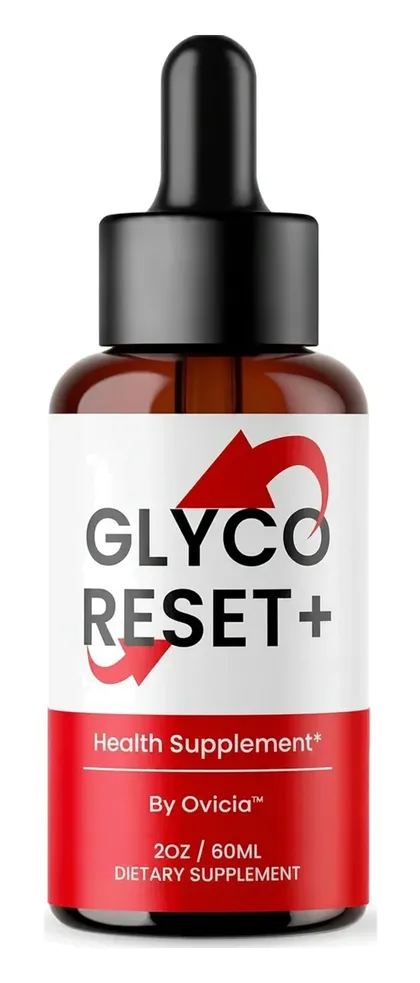
Glyco Reset lists pure cane sugar, an added sugar, but prints no amount, serving size or servings per bottle, so its sugar and carbs cannot be counted. The FDA Daily Value for added sugars is 50 grams a day. Ask your doctor or dietitian, and ask the order desk for the serving figure.
What are the key facts about the sugar in Glyco Reset?
There is a small irony in this product. It is sold for blood sugar support, and one of its six ingredients is sugar. That does not make it a bad product, but it does make the missing amount worth a question.
Key facts
- Pure cane sugar is on the ingredient list. It is sucrose from sugar cane and counts as an added sugar.
- The amount per serving is not stated, because no Supplement Facts panel was supplied. The serving size is not stated either.
- For scale, the FDA Daily Value for added sugars is 50 grams a day (FDA, 2026).
- The seller does not say why cane sugar was chosen. It sweetens a liquid that is sour from vinegar and citric acid.
- Apple pectin is a soluble fiber on the same list, also with no amount published.
- Nothing on the list is a sugar substitute, and no sugar-free claim is made.
| Ingredient | Role in the liquid | Sugar or carb relevance |
|---|---|---|
| Apple cider vinegar | Fermented vinegar; acetic acid is the main active compound | Not a sugar source on its own; amount not stated |
| Purified water | The liquid base | None |
| Pure cane sugar | Sweetener | Added sugar; amount not stated |
| Apple pectin | Soluble, gel-forming fiber | A fiber, not a sugar; amount not stated |
| Citric acid | Acidity regulator and flavor | None |
| Sodium citrate | Buffer that keeps acidity steady | None |
What is added sugar, and why does it show up in drops?
Added sugar is sugar put into a food or product, not sugar that came with the fruit or grain. Table sugar from sugar cane is the classic example. It dissolves easily, tastes sweet and calms a sour flavor.
Vinegar is very sour. A small amount of sugar makes a vinegar liquid easier to take. That is the likely job of the cane sugar here, though the seller does not spell it out.
A dropper is small, so the sugar in one serving may also be small. The word “may” is doing the work, because nothing published says how much a serving holds.
How big is a gram of sugar when you only know the daily limit?
The Daily Value of 50 grams a day is a yardstick, not a rule for you. It helps you picture how much of a day's allowance a product could use, but only once the product tells you its grams.
Glyco Reset has not told us. So any claim that it is “low sugar” or “high sugar” would be a guess. You can neither prove nor rule out that the sugar is trivial. What you can do is ask.
How does this fit if you count carbs?
If you count carbs, you add up the grams of sugar and starch in what you eat. A blank where a number should be breaks that sum. You have two honest choices: get the figure, or leave the drops out of your count and tell your care team you did so.
A doctor or dietitian can tell you which choice suits your plan. People who take insulin or sulfonylureas often match food and medicine closely, so even a small unknown can matter to them.
Do not treat the drops as a free extra on the strength of a hunch. Ask first.
What should you ask, and who should you ask?
Three people can help, each with a different piece.
- The order desk, +1 (302) 200-3480. Ask for the serving size and the grams of sugar per serving. Write the answer and the date.
- Your pharmacist. Show the six-name list and ask whether any ingredient matters for your medicines.
- Your doctor or dietitian. Ask how to count the drops in your plan and whether to test your sugar more often at first.
If the desk cannot give a figure, that is useful to know before you pay. The 60-day guarantee exists for exactly that kind of surprise.
Do the pectin and the vinegar change the sugar picture?
Not in any way we can measure. Apple pectin is a gel-forming fiber. Trials of that kind of fiber used a median of 13.1 grams a day (Jovanovski et al., 2019), and a dropper serving cannot plausibly hold that much.
Vinegar has its own research. Liquid vinegar cut the rise in blood sugar after a meal by 31% in a test with 12 healthy adults, using 25 g of vinegar (Feise et al., 2020). Those amounts are far from a dropper. So neither ingredient can be assumed to cancel the sugar in the bottle.
This is one reason the ADA does not recommend supplements for blood sugar benefit (ADA, 2026). Habits such as food choices and activity carry far stronger proof.
What carries stronger proof than any drops?
For adults with prediabetes, lifestyle change has the best evidence. In the CDC National Diabetes Prevention Program, a 5% to 7% weight loss came with a 58% lower risk of type 2 diabetes, and 71% lower for people over 60 (CDC, 2024).
Those numbers come from diet and activity, not from drops. If the sugar question makes you pause, spend that attention on your plate and your walking shoes first. Glyco Reset, if you use it at all, would sit beside those habits.
How do you read the sugar on any supplement label?
- 1
Find the serving size
The number of ml, droppers or tablets that count as one serving.
- 2
Read the sugar line
Look for added sugars and total carbohydrate per serving.
- 3
Multiply by your daily servings
Add up what you would actually take in a day.
- 4
Check the ingredient list
Sugar, cane sugar, syrup and dextrose all mean added sugar.
- 5
Compare with your plan
Set the daily grams beside the limit your care team gave you.
With Glyco Reset, the process stops at step one, because no serving size is published.
Frequently asked questions
Does Glyco Reset have sugar in it?
Yes. Pure cane sugar is on the ingredient list and counts as an added sugar. The amount per serving is not stated.
How much sugar is in one serving of Glyco Reset?
Not published. No Supplement Facts panel, serving size or sugar amount appears in any material we hold, so call the order desk at +1 (302) 200-3480 to ask.
Is Glyco Reset sugar free?
No sugar-free claim is made, and cane sugar is listed. Do not assume the amount is zero.
Should I count Glyco Reset in my carbs?
Ask your doctor or dietitian. Until the sugar per serving is known, the amount is uncertain, so plan accordingly and tell your care team.
Why would a blood sugar product list sugar?
The seller does not explain. Sugar likely sweetens a liquid that is sour from vinegar and citric acid, but that is our reading, not a published reason.
What is the Daily Value for added sugars?
The FDA sets it at 50 grams a day. It is a reference for labels, not a personal limit.
Our view
The cane sugar in Glyco Reset is probably there for taste, and probably small. Both words are guesses, because the amount is not printed. For a casual user that gap may not matter. For someone who counts carbs, it can.
Get the number or plan around the blank. Either way, keep your doctor or dietitian in the picture, and remember that the strongest evidence for blood sugar health is in habits, not in a bottle.
Last updated